

Recovery and Purpose
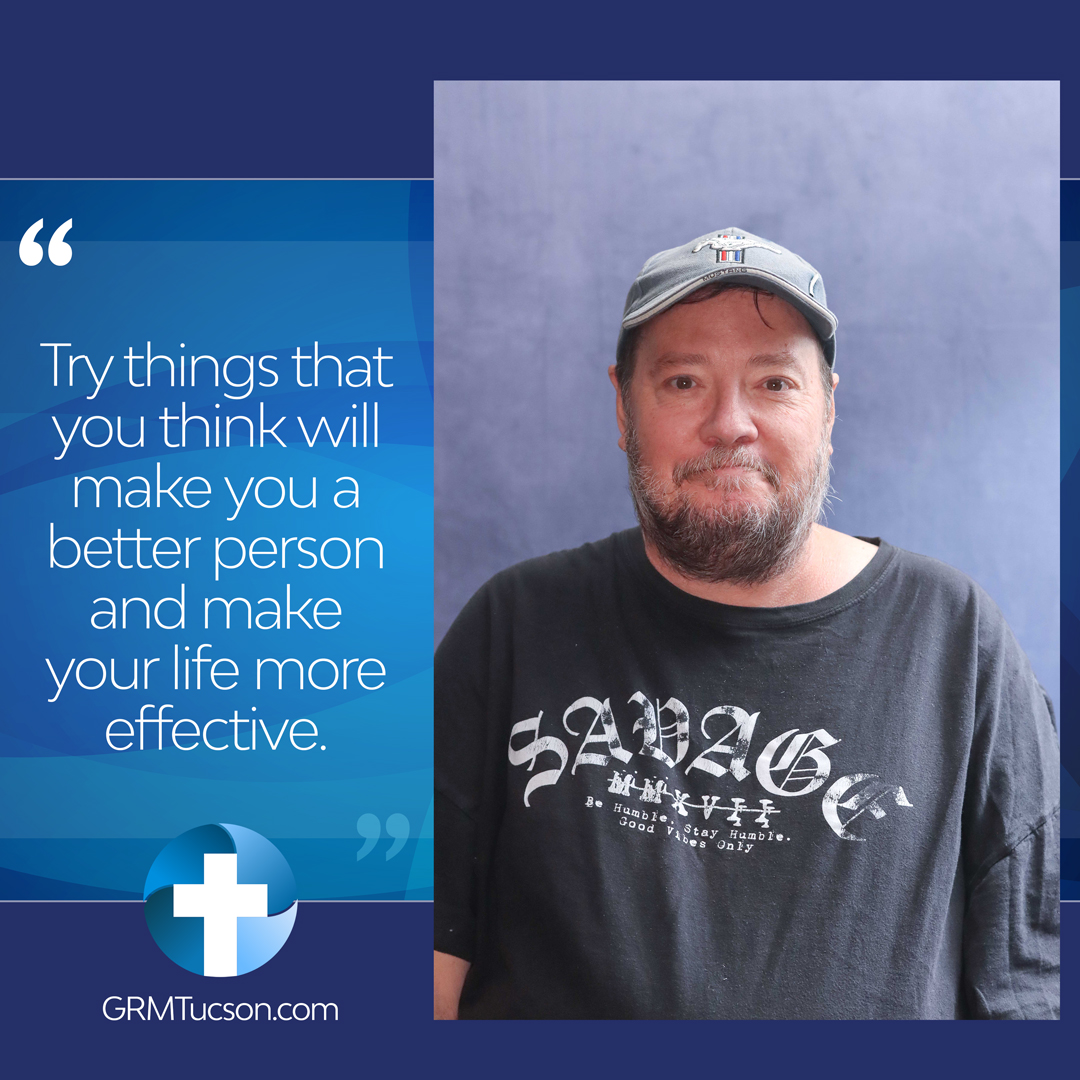
Greg
recovery
A Beginning Shaped by Learning and Music
Greg was born in Portales, New Mexico, into a family that valued education and music. His father taught him, and his mother introduced him to music. Greg remembers learning to read at an unusually young age and performing for neighbors as a little boy. Even then, being onstage gave him something he would spend years trying to understand: “If I’m not getting input from an audience, I feel like I’m not worth anything.” Though he describes his childhood as loving, he also remembers feeling different and lonely.
Following the Music and Building a Life
After high school, Greg attended Lubbock Christian University, where he sang in choirs and pursued music. A record label offered him a developmental deal, and he spent years performing. He married young, but the marriage lasted less than two years; he later reflected that he had not yet learned how to balance a relationship with the life he was chasing. In 1997, he married again. He and his wife built a life together, returned to college, and Greg earned a degree in computer science.
Success, Loss, and a Long Road Without a Home
Greg worked in healthcare and IT, eventually taking a job installing robotics systems that carried him around the world. But after the 2008 housing crisis, financial pressure and difficulties in his marriage grew. When that marriage ended, he lost his job and home, and homelessness became a reality that followed him through years of moving between places and programs. Alcohol, he explained, became harder to control after profound losses. “When I lost my wife, I was miserable,” he said. His faith remained part of his story through the upheaval: “Me and God are in this together.”
Finding His Way Back Through Recovery and Purpose
After time in other recovery settings, including CBI in Benson, Greg came to Gospel Rescue Mission seeking recovery and stability. The community mattered: he described feeling companionship at the Mission and sleeping better in the dorms than when alone. But when he left before, the loneliness returned. “When I’m not here,” he recalled, “I was… bored, lonely.” This time, he says, he is trying to look beyond the temporary comfort of being in a structured place and work on the pain and trauma that follow him outside it. Greg says he is returning with more humility and a clearer sense of what helps him: connection, stability, recovery, and taking care of his health. He hopes to contribute at the Mission, perhaps by teaching, coaching, or volunteering. He has learned that sharing what he knows is not the same as doing his own healing: “I need to practice what I preach more than preach what I know.” For Greg, progress means building a life around service and people—not chasing a title or proving himself to anyone.